
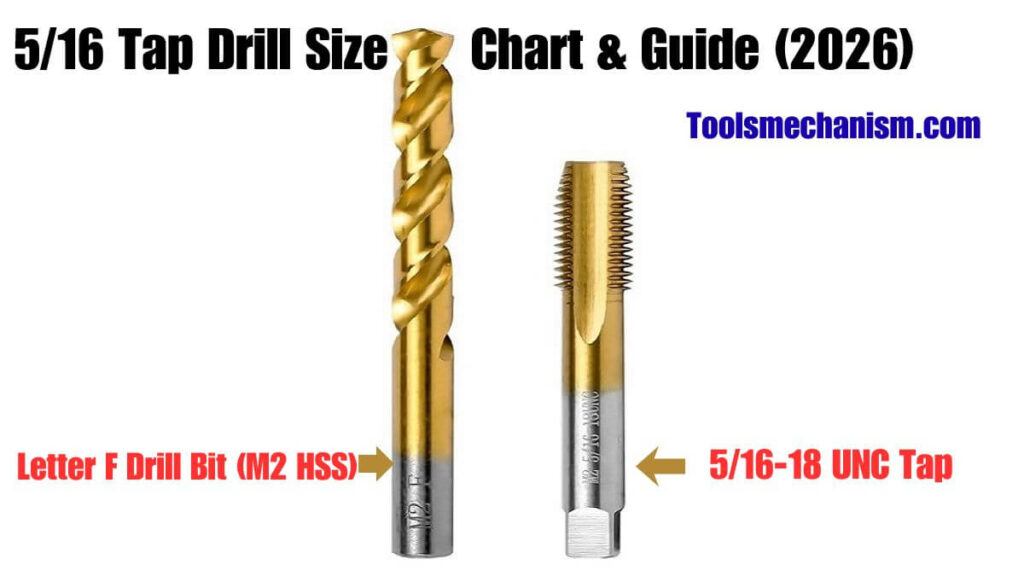
Choosing the correct drill bit for a 5/16 tap is one of the most vital steps in any mechanical repair or DIY project. If you are a mechanic, a DIY enthusiast, or a craftsman, you have likely asked yourself, What Size Drill Should I Use for a 5/16 Tap? Getting the hole size exactly right is the difference between a high-quality, professional thread and a frustrating, broken tap stuck deep inside your workpiece.
In the world of precision engineering, there is very little room for error. A hole that is even a few thousandths of an inch too small can cause immense friction, leading to heat buildup and tool failure. Conversely, a hole that is too large will lead to shallow threads that can strip easily under pressure. This is why understanding the relationship between the 5/16 tap and its corresponding drill bit is essential for anyone working with metal, wood, or plastics.
? Quick Answer: 5/16 Tap Drill Sizes
The correct drill bit for a 5/16 tap depends on the thread pitch you are using:
- 5/16-18 UNC (Coarse): Use a Letter F drill bit (0.2570″).
- 5/16-24 UNF (Fine): Use a Letter I drill bit (0.2720″).
In this 2026 updated guide from Toolsmechanism, we are going to explore the exact drill sizes for both 5/16-18 UNC (Coarse) and 5/16-24 UNF (Fine) threads. We will dive into the technical details of Letter F and Letter I drill bits, explain the math behind tap drill calculations, and provide you with a comprehensive chart that you can bookmark for future use. Whether you are using M2 HSS tools or standard carbon steel, this guide has everything you need to succeed.
| Product Name | Best Used For | Check Price |
|---|---|---|
| Letter F Drill Bit (HSS M2)& 5/16-18 UNC Tap | Standard 5/16-18 UNC Threading | Check Price on Amazon |
| 5/16-18 UNC Coarse Tap | Creating Clean Threads in Metal | Check Price on Amazon |
| Tap Magic Tapping Fluid | Specialized Biodegradable Compound | Check Price on Amazon |
| Professional Tap & Die Set | Complete Workshop Thread Repair | Check Price on Amazon |
Want a quick visual (2026 Chart & Guide)? Watch our 3-minute video above
Table of Contents
The 5/16 Tap Drill Size Comparison Chart
Before we dive into the details, here is a quick reference chart for the most common 5/16 threads.
Why a Letter F Drill Bit is Perfect for 5/16-18 Taps
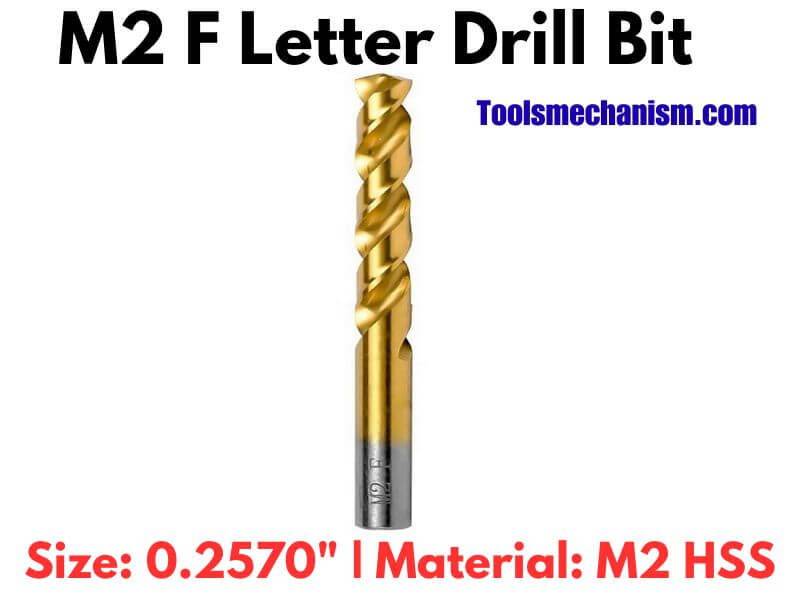
For a standard 5/16-18 coarse thread (UNC), the gold standard is the Letter F drill bit. You might wonder why we don’t just use a common 1/4″ drill bit. While a 1/4″ bit is 0.2500 inches, the Letter F bit is 0.2570 inches. That tiny difference of 0.007 inches is crucial. It ensures exactly 75% thread engagement, which provides the perfect balance between thread strength and ease of tapping.
The Dangers of Using a 1/4″ Drill Bit
If you use a 1/4″ drill bit for your 5/16 tap hole, you are creating a situation with nearly 100% thread engagement. While this sounds strong, it actually makes the tap extremely difficult to turn. The extra torque required can easily snap a high-speed steel tap, especially in harder materials like stainless steel or cast iron. Always stick to the Letter F if you have it in your toolbox.
Adjusting Your Drill Size for Different Materials
Depending on what you are drilling, the answer to What size drill should I use for a 5/16 tap? might change slightly.
- Aluminum and Brass: These are soft metals. You can use a slightly smaller hole (like 1/4″) for maximum grip, as the tap will cut through the soft metal easily.
- Stainless Steel: This is a tough, work-hardening metal. In this case, you might even consider a 17/64″ bit to slightly enlarge the hole, reducing the stress on your tap and preventing it from breaking.
- Plastics: Plastic tends to “shrink” slightly after drilling. Using the standard Letter F bit is usually fine, but you must ensure your drill speed is low to avoid melting the material.
Professional Tapping Tips from Toolsmechanism
Even with the correct drill bit, tapping is an art form. Here are three expert tips to ensure success:
- Use Tapping Fluid: Never tap dry! High-quality tapping oil reduces heat and clears out metal chips.
- The Half-Turn Rule: Turn the tap half a turn clockwise, then a quarter turn back. This “breaks the chip” and keeps the flutes clean.
- Ensure Vertical Alignment: If your tap enters the hole at an angle, your bolt will never sit flush. Use a tap guide or a drill press to keep things perfectly straight.
Frequently Asked Questions (FAQ)
Q: Can I use a 5/16 drill bit for a 5/16 tap?
A: No. A 5/16 drill bit is the same size as the tap itself. It will leave no metal for the tap to cut threads into. Always use a smaller bit like Letter F.
Q: Is M2 HSS better than Carbon Steel?
A: Absolutely. M2 High-Speed Steel (HSS) is more durable and stays sharp much longer, especially when drilling through tough alloys.
Finding the Direct Answer: What Size Drill Should I Use for a 5/16 Tap?
When you are standing in your workshop, the most immediate question is, What size drill should I use for a 5/16 tap? As we have established, for a standard 5/16-18 UNC thread, you should always reach for a Letter F drill bit. However, if your project involves a 5/16-24 UNF fine thread, the correct drill size is a Letter I drill bit.
Maintaining the integrity of your mechanical project depends on this choice. If you use a drill bit that is too small for your 5/16 tap hole, you run the risk of generating too much torque. This torque often leads to the tap snapping off inside the workpiece—a nightmare scenario for any professional or hobbyist. At Toolsmechanism, we always recommend cross-checking your tap markings with a reliable drill size chart to ensure a perfect match every single time.
The Engineering Behind the Drill Bit for a 5/16 Tap
Understanding the “why” is just as important as knowing the “what.” Many people wonder why a fractional 1/4″ bit isn’t the best choice when asking, What size drill should I use for a 5/16 tap? The answer lies in the percentage of thread engagement.
Calculating the Perfect Hole Size
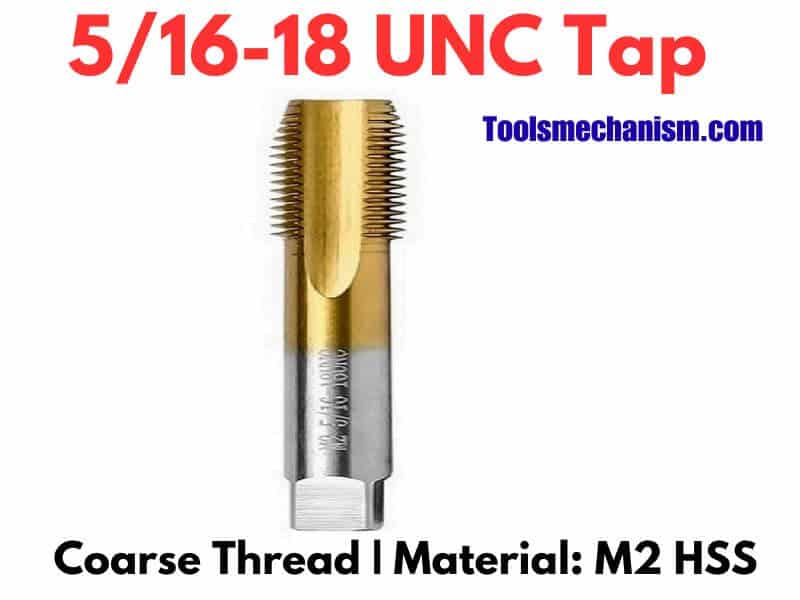
Engineers use a specific formula to determine the drill bit for a 5/16 tap:
Drill Size = Major Diameter – (1 / Threads Per Inch).
For a 5/16-18 tap, the math works out to approximately 0.2570 inches, which is exactly what a Letter F bit provides. This calculation ensures 75% thread engagement, which is considered the gold standard in the aerospace and automotive industries for maximum holding power without risking tool breakage.
What Drill Size Should I Use for a 5/16 Tap in Different Materials?
The material you are working with can actually change the answer to the question: What size drill should I use for a 5/16 tap?
- Working with Stainless Steel: Stainless steel is notoriously tough. If you use a standard Letter F bit, you might find the tapping process extremely difficult. In some heavy-duty industrial cases, professionals might use a slightly larger 17/64″ bit to reduce friction.
- Working with Cast Iron: Cast iron is brittle. When drilling a hole for a 5/16 tap, ensure you are using a sharp M2 HSS bit to avoid chipping the edges of the hole.
- Working with Soft Plastics: Plastics tend to expand slightly after drilling. For a 5/16 tap in high-density plastic, the standard Letter F bit is usually sufficient, but the tapping speed should be kept low to avoid melting the threads.
Expert Maintenance: Keeping Your 5/16 Tapping Tools Sharp
Your journey doesn’t end with knowing what size drill should I use for a 5/16 tap. You must also maintain your tools. High-speed steel (HSS) bits like the M2 grade require proper care. After completing your 5/16 tapping project, always clean your drill bits and taps with a light coat of machine oil. This prevents rust and ensures that the next time you ask, What size drill should I use for a 5/16 tap?, your tools will be ready to deliver a precision cut.
Common Challenges: What Size Drill Should I Use for a 5/16 Tap When Things Go Wrong?
In my years of working with mechanical tools, I have seen even seasoned professionals struggle with the simple question: What size drill should I use for a 5/16 tap? Most mistakes happen not because of a lack of skill, but because of a lack of preparation. Tapping a hole is a delicate process that requires patience.
One of the most common issues is Dry Tapping. Some DIYers believe that if they are only tapping a single hole, they don’t need cutting oil. This is a mistake. Without lubrication, the friction between the drill bit for a 5/16 tap and the metal generates intense heat. This heat can cause the tap to expand and seize, leading to a snap. I always tell my readers at Toolsmechanism: “A drop of oil costs a penny, but a broken tap costs a whole afternoon.”
How to Extract a Broken 5/16 Tap
If you have used the wrong drill size or too much force and the tap has snapped, don’t lose hope. First, try using a pair of needle-nose pliers or a dedicated tap extractor. If the tap is stuck deep, you may need to apply heat to the surrounding metal to expand it slightly. However, the best way to avoid this nightmare is to simply use the correct Letter F drill bit for your 5/16 tap from the very beginning.
Workshop Ethics: Preparing for Your 5/16 Tapping Project
Before you even pick up your drill and ask, What size drill should I use for a 5/16 tap?, you must prepare your workspace. Safety should always be your first priority. When drilling through metal, small, sharp shavings (known as swarf) can fly off at high speeds. Always wear high-quality safety goggles.
Furthermore, ensure that your workpiece is clamped securely. If the metal moves even slightly while you are drilling the 5/16 tap hole, your threads will be crooked. A crooked thread means your bolt will never sit flush against the surface, compromising the structural integrity of your build. Precision starts with a stable base.
Fractional vs. Letter vs. Metric: Clearing the Confusion for 5/16 Taps
One reason people get confused about what size drill should I use for a 5/16 tap is the existence of different measurement systems. In the United States, we use Fractional, Letter, and Numbered bits.
- Fractional: 1/4″ is 0.2500″.
- Letter: F is 0.2570″.
- Metric: 6.5mm is 0.2559″.
As you can see, the Letter F bit is the most precise match for a 5/16-18 tap. While a 6.5mm metric bit is a very close second, it is still not as perfect as the Letter F. When you are looking for maximum “Thread Engagement,” these tiny decimals make a massive difference. At Toolsmechanism, we always advocate for using the most precise tool available to ensure your threads last for decades.
| Product Name | Best Used For | Check Price |
|---|---|---|
| Letter F Drill Bit (HSS M2)& 5/16-18 UNC Tap | Standard 5/16-18 UNC Threading | Check Price on Amazon |
| 5/16-18 UNC Coarse Tap | Creating Clean Threads in Metal | Check Price on Amazon |
| Tap Magic Tapping Fluid | Specialized Biodegradable Compound | Check Price on Amazon |
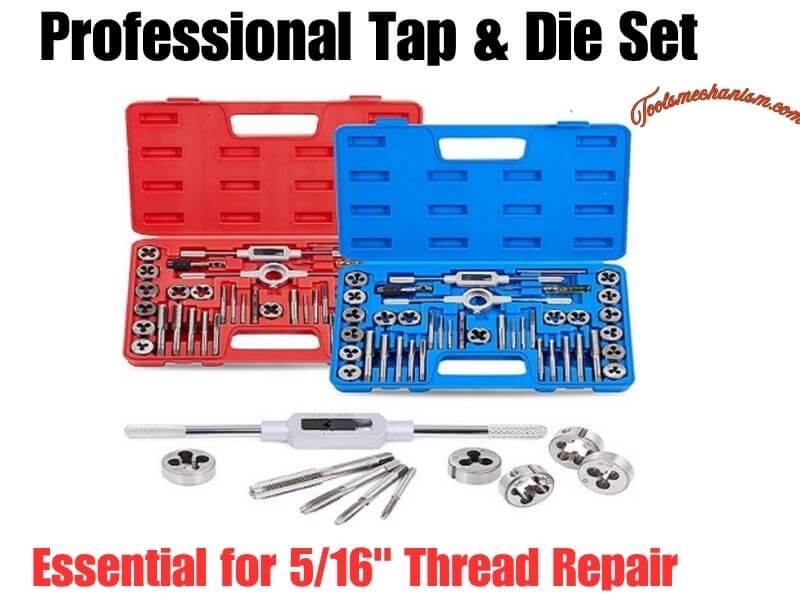
| Professional Tap & Die Set | Complete Workshop Thread Repair | Check Price on Amazon |
Final Thoughts: What Size Drill Should I Use for a 5/16 Tap?
To wrap up, the answer to What size drill should I use for a 5/16 tap? is simple yet technical. For coarse threads, use a Letter F. For fine threads, use a Letter I. By following the steps in this 2026 guide, using high-quality M2 HSS tools, and never skipping the cutting oil, you will achieve professional results every time.
If you want to keep your tools rust-free, check our guide on Lithium vs Moly Grease.
Thank you for trusting Toolsmechanism with your mechanical questions. Remember, a good craftsman is only as good as his preparation. Happy tapping!