
Learning how to drill into concrete with a hammer drill is a fundamental skill for many DIY and professional projects, from hanging shelves to installing anchors. Unlike regular drills, a hammer drill uses a powerful percussive action to pulverize the concrete as it drills, making the job fast and efficient. This guide will show you the correct technique and safety precautions.
Table of Contents
Safety First: Essential Gear for Drilling Concrete
Before you even think about how to drill into concrete with a hammer drill, your top priority must be safety. Drilling concrete is not like drilling wood; it’s a loud, messy, and potentially hazardous job that creates fine, sharp debris and harmful dust. Never attempt this task without the proper Personal Protective Equipment (PPE).
- Safety Glasses or Goggles: This is non-negotiable. Small, sharp chips of concrete can fly out of the hole at high velocity and can cause serious or permanent eye injury. Always wear wrap-around safety glasses or sealed goggles for maximum protection.
- Dust Mask or Respirator: The fine dust created when drilling concrete contains crystalline silica, which is extremely dangerous to inhale. Prolonged exposure can lead to silicosis, a serious and irreversible lung disease. At a minimum, wear a high-quality N95-rated dust mask. For larger projects or poorly ventilated areas, a half-mask respirator with P100 cartridges is the best choice.
- Hearing Protection: Hammer drills are incredibly loud, often operating well over 100 decibels. Exposure to this level of noise, even for a short period, can cause permanent hearing damage. Always wear foam earplugs or over-ear hearing protectors.
- Gloves: A good pair of work gloves will protect your hands from abrasions and blisters, while also providing a better, more secure grip on the powerful tool.
How to Drill into Concrete with a Hammer Drill? 6 Easy Steps
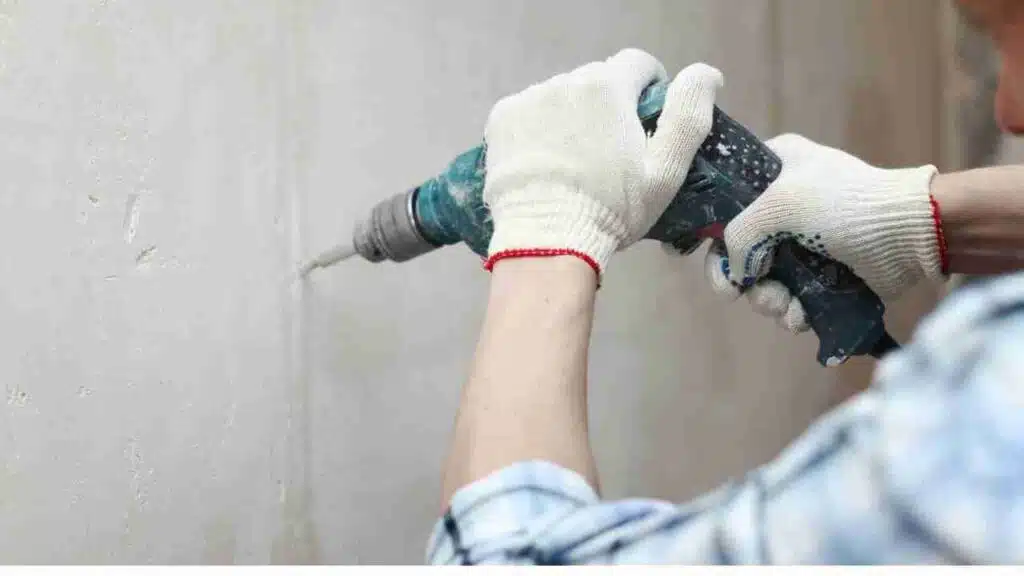
To be able to drill into concrete and bricks easily, you need to take three steps. You should get a hammer drill, choose the right bits, and learn how to use the tool. So, here are the steps involved in drilling with a hammer drill. Before you start, make sure you wear goggles to protect your eyes because the process will elicit a lot of dust. Protect your hands with a pair of gloves too.
How to Drill into Concrete with a Hammer Drill? Step 1 :
Choose the appropriate bit with the right diameter. Find out the diameter of the hole and choose the drill bit with the same diameter as the hole.
Step 2 :
Insert the bit into the drill. It should be a quarter-inch longer than the depth of the hole.
Step 3 :
Mark the spot on which you want to drill the hole.
Step 4 :
Start the drill and place the tip of the bit on the exact spot. Select “low” speed and begin drilling. Try to push forward as you drill.
Step 5 :
After a few seconds, stop and clean off the dust on the hole. Increase the speed to medium and continue.
Step 6 :
When you hit a quarter-inch depth, you can stop.
Precautions:
There are a few precautionary measures to consider as well. Never drill a hole into concrete without wearing a pair of glasses to prevent dust from entering your eyes. A hammer drill is a powerful drill that could throw you off balance, so you need to stand firm with your feet slightly spread apart when you want to start drilling.
Ensure your children and pets are locked away to prevent them from running into you or startling you while working with a hammer drill. The tool can pierce through anything at an alarming speed. You don’t want to mistakenly place it on the wrong spot.
Worn bits will slow down the process. So, you need to check the tip of the bit before inserting it. Worn bits should be replaced as quickly as possible.
It is a good practice to remove the drill bit when you’re through with the device. Finally, don’t touch the bit immediately after a drilling session. It will be very hot and could burn your fingers. In fact, it should never come in contact with any object. Wait until the bit cools down before you remove it. This should not exceed 10 minutes.
Can Hammer Drills Drill Through Concrete?
Yes, hammer drills can easily drill through concrete and bricks. How to Drill into Concrete with a Hammer Drill. That’s because they are designed to spin and thrust into the material being drilled. Ensure you use the right bit for each type of drilling job. And apply a little bit of pressure as you drill through concrete.
Can I Use a Cordless Hammer Drill for Concrete?
Sure! A cordless hammer drill is as rugged and efficient as the corded version. Cordless hammer drills are powered by a rechargeable battery. Remember, a hammer drill requires only 12 volts to work, and that voltage can be supplied by rechargeable batteries.
In fact, a cordless hammer drill is easier to use. There’s no cord-length restriction. And you can use it wherever there’s no electricity. When the battery goes down, you can recharge it. Some smart users often make use of a fully charged extra battery. So, when the original battery gets weak, you can replace it with an extra battery.
How Long Does It Take to Drill a Hole into Concrete with a Hammer Drill?
To appreciate the usefulness of a hammer drill, bear in mind that it can drill a 2-inch deep and ¼-inch wide hole into concrete in less than a minute. This may not be possible if the drill bit of your hammer drill is worn. This is why you need to replace a broken or worn bit when you notice it. When the bit is worn, its ability to strike and pierce through concrete will be reduced dramatically. This will make your drilling work slower.
Should I Use Water When Drilling Concrete?
Yes. You can water the concrete before drilling. Even though this is not necessary, it has a couple of benefits. Water reduces drilling dust. And water will cool down the drill bit and prevent it from overheating. So, it is totally up to you to use water or not.
What Speed Should You Drill Concrete?
Most hammer drills come with three speed levels – low, medium, and high. The higher the speed, the faster it will drill a hole. Nevertheless, it is better to start with “low” speed, and then you can increase the speed to “medium.” It is advisable to limit the usage of high speed. The more you use high speed, the sooner your brill bit will get worn out.
Final Words
Now that you know how to use a hammer drill, you can take your first shot. However, make sure you take the time to study the usage instructions and follow them strictly. And if you’re planning to buy a hammer drill, you’re better off buying it on Amazon. This is because the platform offers the best price deals.
In addition, products sold on Amazon come with a 30-day return window. That means you have 30 days to try your new hammer drill, and if you don’t like it, you can return it for another one or get a full refund. Another reason to purchase the device on Amazon is that you’ll get to see many reviews from people who have used the tool. Take the time to read at least five reviews.
Remember to let the drill do the work; applying steady pressure is more effective than forcing it. By following these steps, you are now well-equipped with the knowledge of how to drill into concrete with a hammer drill cleanly and efficiently. This fundamental technique is essential for anyone looking to work with masonry. Mastering how to drill into concrete with a hammer drill will ensure your projects are not only professional-looking but also safe and secure.
Frequently Question & Answer
Question 1: What is the best type of drill bit for drilling into concrete?
Answer 1: You must use a masonry drill bit with a carbide tip. These bits are specifically designed to withstand the abrasive nature of concrete. For use with a hammer drill, it’s best to use an SDS or SDS-PLUS bit, as they lock into the chuck and are built to handle the intense hammering action.
Question 2: What happens if I hit rebar while drilling?
Answer 2: If you hit steel rebar, you will notice the drill stops making progress and you may see sparks. Stop drilling immediately. Forcing the drill can damage the bit and the drill’s motor. You will either need to drill a new hole in a slightly different location or, for professional applications, use a specialized rebar-cutting drill bit.
Question 3: Why is my hammer drill not drilling into the concrete?
Answer 3: There could be several reasons. First, ensure you are in “hammer drill” mode, not “drill-only” mode. Second, check that your drill bit is not dull or worn out. A dull bit will not make progress. Third, you may be applying too much pressure. Let the tool’s hammering action do the work. Finally, you may have hit an extremely hard piece of aggregate or rebar.
Question 4: How do I get a clean hole without the edges chipping?
Answer 4:
To prevent the edges (spalling) from chipping, start the hole at a very slow speed without the hammer function engaged. Once you have a small, clean dimple started, you can then switch to hammer mode and increase the speed. Placing a piece of masking tape over the spot before you start can also help to keep the edges clean.